When the Grid Goes Dark: The Ham Radio Operators America Forgot It Needed
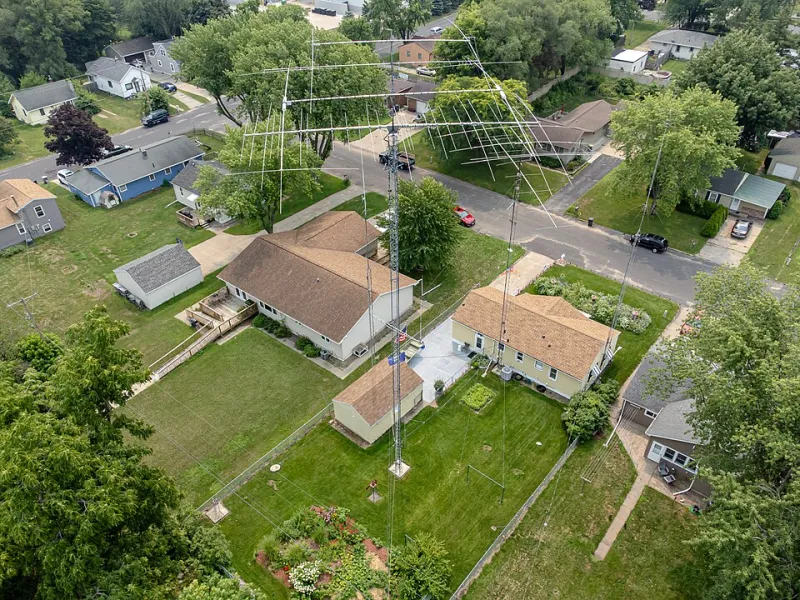
Photo: Wikideas1, CC0, via Wikimedia Commons
Somewhere in a suburban garage in Baton Rouge, a retired electrical engineer named Dennis is running a full communications relay for a flooded neighborhood — and nobody outside a three-mile radius knows he exists. He's not a government contractor. He's not affiliated with FEMA. He's a licensed amateur radio operator, and in the hours after a major storm tears through his parish, he becomes something the official emergency management playbook doesn't quite have a category for: essential.
This is the part of American disaster response that rarely makes the evening news. While the cameras chase the National Guard convoys and the Red Cross tents, a decentralized web of ham radio enthusiasts is quietly doing the connective tissue work — patching together rescue coordinators, passing welfare messages to families who've lost contact with loved ones, and routing logistical data when every digital channel has gone sideways.
It's analog infrastructure operating in the shadow of a digital world that barely acknowledges it exists.
Frequencies Nobody's Selling You
Ham radio — the informal name for amateur radio — sits in a curious cultural pocket. It's simultaneously old-fashioned and technically sophisticated. To get licensed, operators have to pass FCC exams covering everything from electronics theory to radio wave propagation. The entry-level Technician license is manageable for most people, but the General and Amateur Extra classes go deep into the kind of knowledge that most engineers respect.
What makes the whole ecosystem remarkable, though, isn't the technical gatekeeping. It's what happens when licensed operators self-organize.
Groups like ARES (Amateur Radio Emergency Service) and RACES (Radio Amateur Civil Emergency Service) exist specifically to coordinate amateur operators during crises. They're not paid. They're not uniformed. They show up with their own equipment, their own antennas, their own power sources — often running off car batteries or solar panels when the utility grid is down — and they build communications networks from scratch.
After Hurricane Katrina in 2005, amateur radio operators filled a communications void that left official agencies genuinely stunned. With cell infrastructure obliterated across coastal Louisiana and Mississippi, ham operators established relay chains that stretched from the Gulf Coast to inland coordination centers. They passed health-and-welfare traffic. They relayed hospital capacity data. In some cases, they were the only link between isolated communities and the outside world for the better part of a week.
The after-action reports from that disaster quietly noted the contribution. But the public narrative moved on.
The Signal Doesn't Care About Your Carrier Plan
There's a philosophical dimension to why ham radio keeps reasserting its relevance, and it has everything to do with infrastructure ownership.
Every text message you send rides on corporate-owned towers, passes through proprietary switching systems, and depends on a power grid that most Americans have zero control over. It's convenient right up until it isn't. Ham radio, by contrast, operates on frequencies allocated by the FCC for non-commercial use. The infrastructure is distributed across thousands of individual operators and repeater stations. There's no single point of failure because there's no single owner.
During the 2017 California wildfires, cell networks in affected areas buckled under simultaneous demand and physical tower damage. Amateur operators in the region activated their emergency nets and maintained communication corridors that helped evacuation coordinators track which roads were still passable. One documented case out of Sonoma County involved a ham operator relaying real-time fire perimeter updates to a county emergency operations center that had lost its primary data link.
These aren't edge cases. They're a pattern that repeats with depressing regularity every time a major disaster hits.
The People Behind the Mic
Spend any time around the ham radio community and you'll notice something that cuts against the stereotype of the basement-dwelling tech hobbyist. The demographics are genuinely mixed. Yes, there are plenty of retired engineers and military veterans. But there are also nurses, teachers, farmers, and teenagers who got licensed through school programs. The common thread isn't a type — it's a disposition.
These are people who decided, at some point, that depending entirely on systems they don't control felt like a bad bet.
That mindset puts ham operators in interesting alignment with other fringe-adjacent communities — preppers, off-grid homesteaders, community mesh network builders. The overlap isn't total, but it's real. There's a shared instinct toward resilience infrastructure, toward building redundancy into daily life rather than assuming the grid will hold.
What distinguishes ham operators from some of those adjacent communities is the regulatory framework they operate within. Getting licensed means accepting FCC oversight. Operating during emergencies means coordinating with official agencies, not working around them. It's a strange position — deeply independent in spirit, but functionally integrated into the official emergency management system when things go sideways.
Why It's Still Analog in a 5G World
The obvious question is why none of this has been replaced by something more modern. Satellite phones exist. Mesh networking apps like Meshtastic are gaining traction. Starlink terminals are showing up in disaster zones.
The answer ham operators give — and it's hard to argue with — is that all of those alternatives still depend on manufactured hardware, supply chains, and in some cases, subscription services. A ham operator with a decades-old transceiver, a wire antenna strung between two trees, and a car battery can communicate across hundreds of miles with zero ongoing cost and zero corporate dependency.
There's also the question of operator density. The US has over 750,000 licensed amateur radio operators. That's a distributed human network with technical skills, personal equipment, and established protocols already in place. No disaster preparedness planner could build that from scratch. It exists because generations of hobbyists built it for reasons that had nothing to do with emergency management — and it turned out to be exactly what emergency management needed.
Dennis in Baton Rouge probably isn't thinking about any of this when he's working a net during a flood. He's just doing what he knows how to do, on frequencies nobody's trying to sell him, with equipment he understands completely.
That's the signal. Most people just aren't tuned to receive it.