Byte Gravediggers: The Rogue Archivists Pulling Deleted Internet History Back From the Void
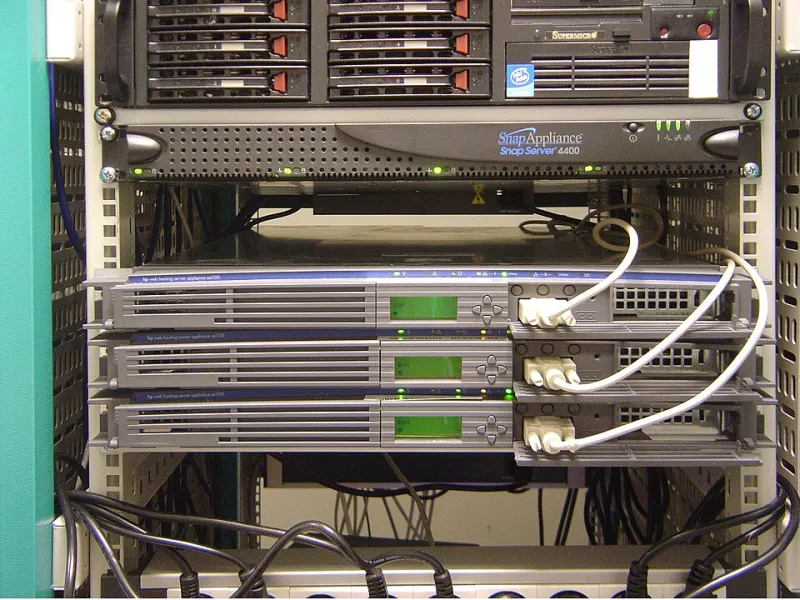
Photo: David Monniaux. Photo taken by myself with a cellular phone. Copyright © 2005, CC BY-SA 3.0, via Wikimedia Commons
There's a version of the internet you'll never find through Google. Not because it's hidden behind a paywall or locked in some corporate vault — but because it was deleted. Quietly. Without ceremony. A forum post here, a Geocities page there, an entire message board that once housed tens of thousands of voices just... gone. The mainstream web moves fast and forgets faster. But not everyone is okay with that.
A loose, largely anonymous network of digital archivists across the United States — and beyond — has been working in the background for years to recover what the internet keeps throwing away. They don't have institutional funding. Most of them don't even have proper titles. They call themselves things like "data hoarders," "byte salvagers," or just people who can't stand watching history get quietly erased.
What Gets Lost (And Why It Matters)
When a website goes dark, it rarely makes news. A hosting bill goes unpaid, a company pivots, a platform decides to "sunset" an old product — and suddenly years of human conversation just evaporate. The early internet especially was a chaotic, decentralized explosion of individual voices: personal blogs, niche hobby forums, early fan communities, grassroots political organizing spaces. Most of that content was never indexed properly. A lot of it was never backed up at all.
The Wayback Machine at the Internet Archive has done heroic work, no question. But it's not enough. Crawlers miss things. Dynamic content — the kind that required a login or loaded via JavaScript — was never captured to begin with. And some content has been actively suppressed: mirror sites of censored material, archives of platforms that were deplatformed, records of online communities that powerful interests wanted quietly forgotten.
That's where the rogue archivists come in.
The Basement Server Underground
Think about the sheer physical reality of what these people are doing. We're talking about individuals running personal servers — sometimes literal tower PCs stacked in a spare bedroom — storing terabytes of crawled web data, corrupted file recoveries, and painstakingly reconstructed forum threads. Some run mirror sites for content that's been taken down under legal pressure. Others specialize in specific eras or communities: the early 2000s web, defunct social platforms, pre-acquisition versions of sites that no longer resemble what they once were.
Subreddits like r/DataHoarder have given some of this community a surface-level public face, but the deeper work happens in IRC channels, private Discord servers, and direct-message chains. People share tools, trade recovered files, and coordinate large-scale crawls before major platforms announce shutdowns. When Tumblr announced its NSFW content purge back in 2018, archivists were mobilizing within hours — not just for the obvious reasons, but because entire subcultures, art movements, and community histories were about to be wiped.
The Archaeology of Corrupted Files
Recovering a dead website isn't like downloading a file. Often the data exists in fragments — partial crawls, cached versions, screenshots, RSS feeds that preserved text but not images. Archivists piece these together like digital archaeologists brushing dirt off broken pottery. Some use tools like HTTrack or custom Python scrapers. Others work with raw database exports when they can get them, sometimes donated by former site administrators who didn't have the resources to keep things running but couldn't bring themselves to just delete everything.
Corrupted files are their own subspecialty. Bit rot is real — data stored on aging hard drives or optical media degrades over time. Recovering a forum backup from a 15-year-old DVD-R requires patience, specific software, and sometimes just a lot of trial and error. There are people in these communities who have spent hundreds of hours recovering a single website because they believed the content was worth saving.
Who Are These People, Really?
The motivations are as varied as the archivists themselves. Some are historians by training who got frustrated watching primary sources disappear. Some are former members of the communities they're preserving — people who watched their own digital homes get bulldozed and decided to at least save the blueprints. A few are driven by more ideological concerns: a deep suspicion of centralized platform control and what gets remembered versus what gets erased when corporations make those decisions.
There's also a real tension in this space around legality. Mirroring copyrighted content, preserving material that was removed under DMCA claims, maintaining archives of content that platforms explicitly deleted — all of this exists in murky legal territory. Most archivists are careful about what they share publicly versus what they maintain privately. The line between preservation and piracy isn't always obvious, and different people in these communities draw it in different places.
What the Mainstream Internet Is Choosing to Forget
Here's the part that should make you uncomfortable: the internet's memory is not neutral. Platforms make active choices about what to archive and what to let die. Those choices reflect business interests, legal pressures, and cultural biases. Early Black Twitter conversations, Indigenous community forums, underground music scenes, queer spaces from the pre-mainstream-acceptance era — this content is disproportionately at risk because the communities that created it often had the least institutional power to demand its preservation.
The Library of Congress has a web archiving program. Universities maintain digital preservation initiatives. But they move slowly, they have mandates and restrictions, and they simply can't capture everything. The rogue archivists aren't waiting for permission. They're doing the work right now, in real time, on their own dime, because they believe the record matters.
Signals Worth Saving
The internet likes to present itself as permanent — everything stored in the cloud, always accessible, never truly gone. That's a comfortable lie. Data is physical. Servers fail. Companies fold. Platforms pivot. And every time that happens, something disappears that someone, somewhere, thought was worth saying.
The byte gravediggers know this. That's why they're out there right now, running crawls and recovering corrupted backups and mirroring sites that someone powerful decided the world didn't need to see anymore. They're not doing it for recognition. Most of them are doing it because the alternative — a curated, sanitized, corporate-approved version of internet history — is worse than the messy, chaotic, fully human record they're fighting to preserve.
Some signals are worth decoding. Some history is worth the hard drive space.