Your Clock Is Lying: The Hidden Timeline Rewrites Buried Inside Every Device
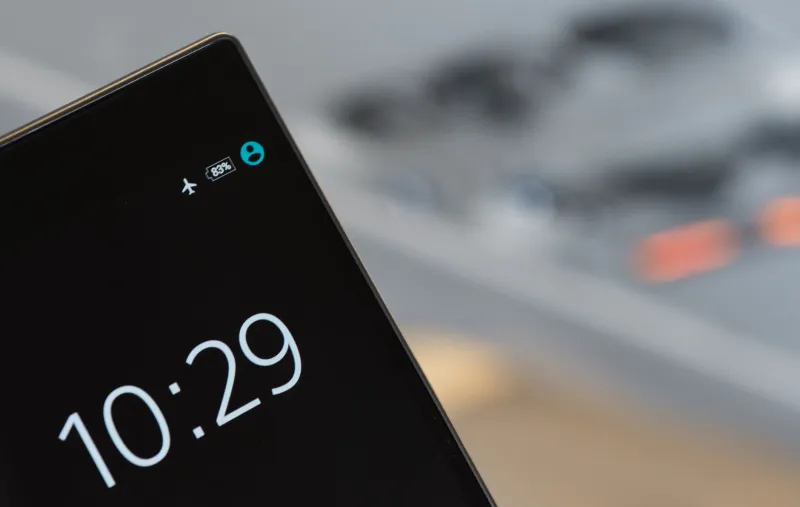
You took that photo at 11:47 PM. Except according to three different systems, you took it at 11:44, 11:52, and — somehow — 8:17 AM the following morning. Nobody changed anything. Nobody hacked anything. The clock just... disagreed with itself.
This isn't a glitch. It's infrastructure. And it's happening constantly, invisibly, across every device you own.
The Myth of the Universal Clock
Most people assume their phone knows what time it is. And technically, it does — most of the time. Modern smartphones sync to Network Time Protocol servers, a layered system of atomic clocks and regional time servers that keeps the internet's sense of "now" reasonably consistent. But reasonably isn't the same as exactly, and exactly is what matters when timestamps become evidence.
Here's the part that gets weird: your phone's clock, your laptop's clock, the server hosting your email, the router logging your traffic, and the security camera in the parking lot are almost certainly not synchronized to each other. They're each doing their best impression of the correct time, and the gap between those impressions can range from a few seconds to several minutes — sometimes hours, if a device has been offline or poorly configured.
Those gaps are where the trouble lives.
"People treat digital timestamps like they're objective facts," says one independent security researcher who asked not to be identified by name. "They're not. They're educated guesses logged by machines that are each trusting a slightly different authority about what time it is."
Drift, Desync, and the Devices Nobody Updates
The technical term is clock drift — the gradual divergence of a device's internal clock from actual time. Every piece of hardware with a clock experiences it to some degree. Cheap IoT gadgets are particularly bad offenders. A budget smart thermostat or an older surveillance camera might drift by minutes per day if it's not regularly resyncing. A device that's been running for a year without a firmware update could be living in a genuinely different temporal reality than the rest of your network.
This matters more than it sounds. Imagine a scenario where a workplace incident is investigated using logs from three separate systems — an access card reader, a shared server, and a personal smartphone. If those systems have never been properly synchronized, the event timeline reconstructed from their logs might be internally inconsistent in ways that look suspicious, or worse, exonerating, depending on which log you trust.
Forensic investigators have been wrestling with this problem for years. "Timestamp reconciliation is one of the most underappreciated steps in digital forensics," says a cybersecurity consultant who works with law firms on electronic discovery cases. "Juries see a timestamp and they think it's like a receipt. It's not. It's more like a witness who was kind of paying attention."
When the Gap Becomes Intentional
Accidental drift is one thing. But researchers have started documenting cases where timestamp manipulation appears to be deliberate — either through device configuration or through software designed to obscure when data was created or modified.
Some of this is mundane and legal. Photo editing apps routinely preserve the original EXIF timestamp of an image even after it's been altered, which means a heavily edited photo can appear to have been taken before the editing ever happened. Cloud backup systems sometimes log the sync time rather than the creation time, creating a false impression of when a file first existed.
Other cases are murkier. In several high-profile civil litigation matters over the past decade, opposing counsel has challenged digital evidence specifically because metadata timestamps didn't align with other corroborating records. In at least some of those cases, the discrepancy was never fully explained — leaving open the question of whether the mismatch was infrastructure noise or something more deliberate.
The security community has a phrase for this kind of ambiguity: plausible deniability through entropy. The system is complex enough, and misconfigured often enough, that intentional manipulation can hide inside the noise of accidental drift.
Your Phone's Secret Time Negotiations
Here's something your carrier probably never mentioned: your smartphone is constantly negotiating time with multiple authorities simultaneously. There's the cellular network's time signal, GPS satellite time, NTP servers accessed over Wi-Fi, and the device's own hardware clock — all of which your phone quietly arbitrates between, usually without logging which source it trusted at any given moment.
When those sources disagree, the phone makes a choice. Usually it's fine. But in edge cases — network handoffs, airplane mode transitions, international roaming, or just a bad connection to a flaky NTP server — the choice can be wrong. And when it's wrong, every event logged during that window gets a timestamp that doesn't reflect reality.
This is especially relevant for anything you do during travel. A phone crossing time zones while partially offline can produce photo metadata that places events in the wrong hour entirely, sometimes the wrong day. The photo was taken. The moment was real. The timestamp is fiction.
What the Discrepancy Hides
For most people, none of this matters in any practical sense. Your 11:47 PM photo being logged as 11:52 doesn't change your life. But there are contexts where it absolutely does.
Employment disputes involving after-hours communication. Custody cases hinging on when a parent was reachable. Insurance claims tied to when a device was at a specific location. Criminal investigations reconstructing a sequence of events. In all of these, digital timestamps carry weight they may not deserve — and the systems that generate them were never designed to be that precise or that trustworthy.
Legal experts who specialize in electronic evidence have been pushing for years to get courts to treat timestamps with more skepticism. Progress has been slow. The technology moves faster than the rules governing how it's interpreted, and most people — including most judges and jurors — still carry the intuition that a digital record is inherently more reliable than a human memory.
It might be less reliable. It's just more confident about being wrong.
Reading the Signal
So what do you do with this? For starters, you stop treating your device's clock as gospel — especially for anything that might matter later. If you're documenting something important, cross-reference timestamps across multiple independent systems. Screenshot the time from a reliable source. Note the discrepancy if one exists.
And maybe sit with the slightly uncomfortable realization that the chronology of your digital life — the timeline of photos, messages, locations, and events that your devices have been quietly assembling for years — is built on a foundation of coordinated guesswork.
The clocks are doing their best. But their best is messier than anyone told you.
The timestamps don't lie, exactly. They just don't quite tell the truth.