Every Place You've Ever Been Is Still On File Somewhere
You didn't sign anything. You didn't agree to be catalogued. But somewhere between the morning coffee run and the late-night pharmacy stop, a version of your Tuesday got written down in a language made of latitude and longitude. And it's been filed.
Location data is the kind of surveillance that feels abstract until it isn't. Most people understand, vaguely, that their phone knows where they are. What they don't fully grasp is how many other systems are writing that same information down at the same time — and how long those records tend to stick around.
The Pings You Never Authorized
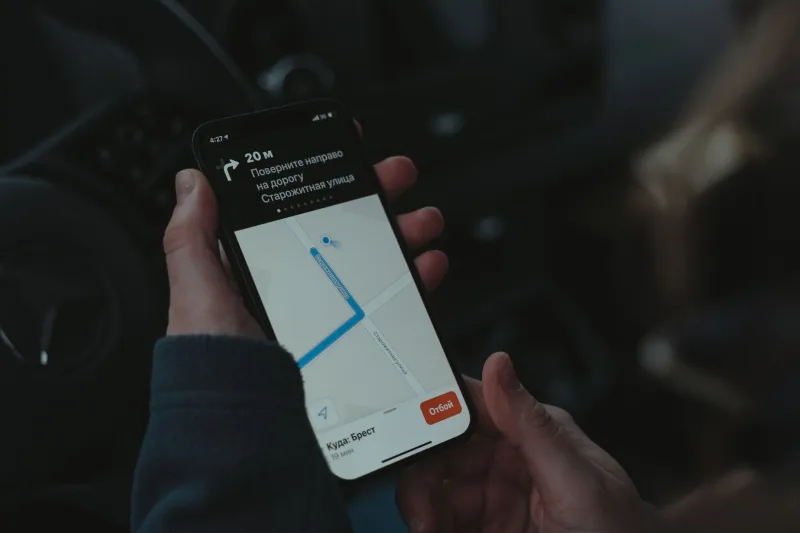
Start with the obvious: GPS. Your phone's navigation app, your fitness tracker, your camera's geotagging feature — these are all asking your device's GPS chip for a precise coordinate, often without making a big deal about it. Every photo you take with location services enabled embeds that data directly into the image file. Share that photo anywhere, and you've shared a pin on a map.
But GPS is just one layer. Beneath it, your phone is constantly scanning for Wi-Fi networks — even when you're not connected to any of them. This process, called Wi-Fi positioning, cross-references nearby network names against massive databases of known router locations. It's fast, it works indoors, and it's happening in the background whether you're actively using your phone or not. Same goes for Bluetooth beacons, which are embedded in everything from airport kiosks to retail store fixtures specifically to log foot traffic.
Then there's cell tower triangulation. Your carrier knows which towers your phone is pinging, and since towers have fixed locations, your general position can be calculated from the signal pattern. This data is logged by default. It's also sold — to data brokers, to analytics firms, sometimes to law enforcement via processes that don't always require a warrant.
IP Addresses Are Addresses
Every time you connect to the internet from a new location, you're broadcasting a rough geographic coordinate in the form of your IP address. Log into your work email from a hotel in Phoenix, and that server now has a record of a Phoenix connection tied to your account. Do it from a coffee shop in Austin, and Austin gets logged too.
IP geolocation isn't perfect — it can misplace you by a few miles, sometimes more. But it's precise enough to paint a picture. String together six months of IP logs from your email provider, your streaming service, your bank, and your social media accounts, and you've got a rough travel diary. Nobody asked you to keep it. It assembled itself.
This is the part that trips people up. They think of location tracking as something that requires a dedicated tracking app or a deliberately invasive piece of software. In reality, it's a byproduct of normal internet use. The infrastructure wasn't built to surveil you specifically. It was built for authentication, fraud prevention, and ad targeting — and surveillance came along for the ride.
The Mosaic Effect
No single data point is particularly revealing. The fact that your phone pinged a cell tower near a hospital at 2 p.m. on a Wednesday doesn't tell anyone much. But combine that ping with a pharmacy receipt pulled from a loyalty card program, a parking garage entry logged by a license plate reader, and an IP connection to a medical provider's patient portal — and now you've got a story.
This is called the mosaic effect, and it's why privacy researchers get nervous when people say "I have nothing to hide." Individual pieces of location data are boring. Assembled into a pattern, they become something closer to a biography. They can reveal medical conditions, relationship statuses, financial situations, political affiliations, and religious practices — none of which you intended to disclose.
Data brokers have understood this for years. Companies like Veraset, SafeGraph, and X-Mode (now rebranded as Outlogic) built entire business models around aggregating location signals from app SDKs — small chunks of tracking code embedded in apps you actually use — and reselling that data to clients ranging from hedge funds to federal agencies.
The Shelf Life Problem
Here's what makes location data uniquely uncomfortable compared to other kinds of digital exhaust: it ages badly for the person it belongs to, but it ages well for anyone who wants to use it.
A location record from three years ago can still tell you where someone lived, where their kids went to school, what church they attended, whether they visited a particular political headquarters or a particular clinic. The passage of time doesn't neutralize it. If anything, historical location data becomes more useful over time, because it can be compared against current behavior to identify changes.
Most people assume that deleting an app removes the data it collected. It doesn't. The data already left the device the moment it was transmitted to a server. You can revoke location permissions going forward, but you can't reach back into someone else's database and pull your coordinates out.
What You Can Actually Do
The honest answer is: not as much as you'd like. You can disable location services on your phone, but that only addresses the GPS layer. You can use a VPN to mask your IP, but VPNs have their own logging policies and their own failure modes. You can avoid loyalty programs and pay cash, which helps with some retail-level tracking. You can leave your phone at home — though as researchers have demonstrated, even that doesn't make you invisible to license plate readers, facial recognition cameras, or the GPS in your car.
What you can do is get deliberate about what you're consenting to. Audit which apps have location access. Opt out of ad ID tracking in your phone's privacy settings. Understand that "precise location" and "approximate location" are genuinely different permissions with different implications. These steps don't make you invisible, but they reduce the resolution of the picture.
The Record That Precedes You
There's something philosophically strange about location data. Unlike a photo or a written record, you didn't produce it consciously. It's not a document you authored. It's a shadow that got filed without your knowledge, assembled from signals you emitted just by existing in the world with a connected device in your pocket.
And yet it functions like a document. It can be subpoenaed. It can be sold. It can be used to contradict your account of where you were and when. It outlasts the moment it was created by years, sometimes decades.
You've been building this file your entire digital life. The question isn't whether it exists. The question is who's reading it.