Static and Free: The Shortwave Underground Keeping Uncensored Radio Alive
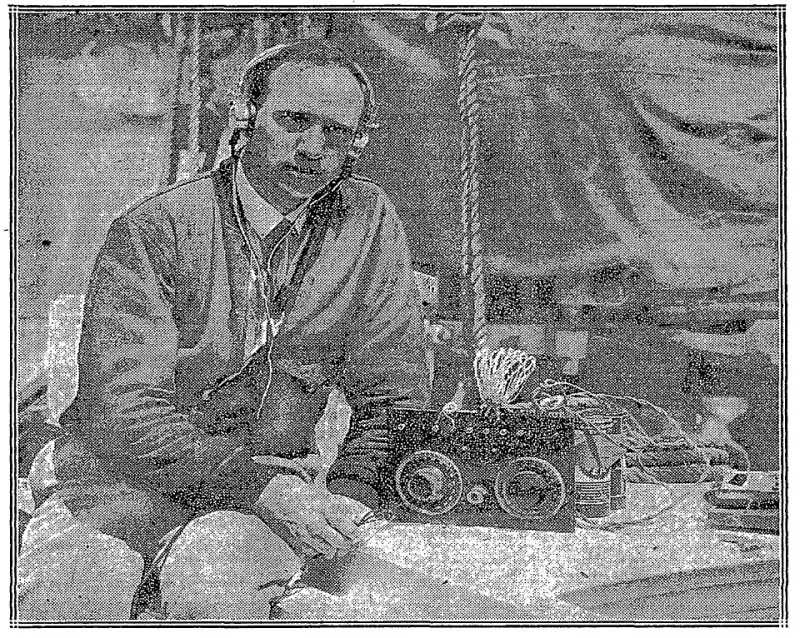
Photo: Wide World Photos, Public domain, via Wikimedia Commons
Somewhere in the American Midwest, a man who goes by the handle "K9DRIFT" is talking into a microphone connected to a radio transmitter that cost him about four hundred dollars. His signal is bouncing off the ionosphere. It's landing in living rooms in Ohio, in truck cabs crossing Nevada, in a basement in rural Tennessee where someone is writing down what he says in a spiral notebook. No server logs. No IP addresses. No terms of service.
This is shortwave radio in 2024, and it is very much not dead.
The Network That Predates the Internet and Outlasted It
Shortwave radio has been around since the 1920s. For most of its history it was associated with Cold War propaganda, religious missionaries, and the kind of guy who spent weekends cataloguing frequencies in a three-ring binder. But something shifted in the last decade or so. As digital platforms became more aggressive about moderating content, a specific type of user started drifting toward the analog fringe — not out of nostalgia, but out of strategy.
The communities operating on shortwave today aren't a monolith. You've got survivalists exchanging preparedness intel, libertarian-leaning political commentators who got tired of getting flagged, religious broadcasters whose content kept getting demonetized, and a loose constellation of what you might call "information anarchists" — people who are philosophically opposed to any single point of failure controlling what gets said.
What they share is the deliberate choice to communicate in a medium that is, by its physical nature, nearly impossible to algorithmically police.
Why Low-Tech Became the Radical Choice
Here's the thing about shortwave that makes it interesting from a cultural standpoint: choosing it in 2024 is not a passive decision. You have to buy equipment. You have to learn how frequencies work, how propagation changes with weather and time of day, how to find the right bands for regional versus long-distance transmission. There's a real barrier to entry, and that barrier functions as a filter.
The people who clear that filter tend to be serious about why they're there.
"If you're willing to learn how to do this, you're not just casually browsing," one operator who broadcasts out of the Pacific Northwest explained in an online forum dedicated to the practice. "You made a decision. You opted out of something."
That opt-out mentality is central to understanding these communities. The mainstream internet conversation about censorship tends to happen on the very platforms being criticized, which creates an obvious irony. Shortwave sidesteps the whole loop. There's no appeal process because there's no moderator. There's no shadowban because there's no algorithm. The signal either reaches you or it doesn't, and that outcome is determined by physics, not policy.
What Actually Gets Broadcast
The content on these networks is genuinely varied, which complicates any simple narrative about who these people are. On any given night, you might catch a prepper running through a detailed breakdown of water filtration options for off-grid living, a former Army vet doing a weekly commentary on foreign policy that he says would never survive YouTube's monetization review, or a rotating cast of voices sharing what they describe as "news from outside the consensus."
Some of it is practical and benign. Some of it is politically charged in ways that would get an account suspended on major platforms. Some of it occupies a genuinely murky middle ground where the content itself isn't inherently extreme but the framing carries a distinct anti-institutional edge.
That mix is important to acknowledge. Shortwave's resistance to censorship means it's a genuine free-for-all. Useful survival knowledge coexists with conspiracy theory. Independent journalism sits next to content that independent fact-checkers would flag immediately. The medium doesn't discriminate, which is exactly the point for its users and exactly the problem for anyone hoping for a clean story.
The Bulletin Board That Bounces Off the Sky
One of the most interesting structural features of contemporary shortwave communities is how they've developed hybrid systems that use analog transmission as a backbone while incorporating digital tools for coordination. Encrypted messaging apps get used to share frequency schedules. Private forums post listening guides. The shortwave broadcast is the public-facing layer; the organizational infrastructure lives just out of reach.
This creates something that functions less like a traditional radio station and more like a distributed bulletin board. Listeners tune in at scheduled times, take notes, and then share what they heard in closed digital spaces. The information travels through multiple layers of transmission — analog to ear to text to encrypted channel — which makes it genuinely difficult to trace or suppress at scale.
It's a communication architecture that would have made Cold War intelligence analysts nervous, and it's being built by people in American suburbs with off-the-shelf equipment.
The Surveillance Blind Spot
Law enforcement and platform trust-and-safety teams have developed increasingly sophisticated tools for monitoring digital communication. Keyword flagging, network analysis, behavioral pattern detection — the infrastructure for watching what people say online is genuinely extensive. Shortwave sits almost entirely outside that infrastructure.
Monitoring shortwave broadcasts at scale would require a physical receiver network and significant human labor to process audio content. It's not impossible, but it's expensive and inefficient compared to automated digital surveillance. For communities that have decided surveillance itself is the problem they're solving for, that inefficiency is the whole point.
Whether you find that reassuring or alarming probably says something about your priors. But as a structural fact about how these networks operate, it's worth understanding clearly.
A Signal Worth Tracking
Shortwave's resurgence as a deliberate cultural choice rather than a legacy habit is one of the more interesting things happening at the edges of American media right now. It's not a mass movement — the numbers are small, the reach is limited, and the learning curve keeps casual participation low. But as a signal about how certain communities are thinking about communication, platform dependence, and the architecture of information control, it's worth paying attention to.
The people broadcasting into the ionosphere tonight aren't doing it because they forgot the internet exists. They're doing it because they remember exactly what the internet became.