Ten Little Indians of the Airwaves: The Shortwave Voices Still Counting Down Over America
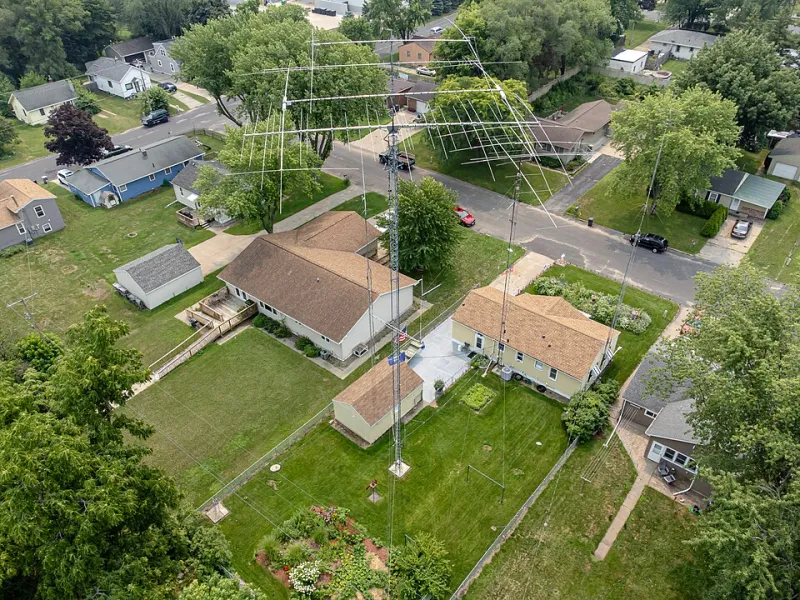
Photo: Joe Haupt from USA, CC BY-SA 2.0, via Wikimedia Commons
Somewhere over the Atlantic, a woman's voice reads five-digit groups into the static. In the desert Southwest, a mechanical tone chimes, then a child recites coordinates. These transmissions have no call signs, no license filings, no return address. They are aimed — supposedly — at nobody. And they are still on the air.
Welcome to the numbers stations, the strangest survivor of twentieth-century spycraft. Signals from the fringe, decoded as far as anyone can decode them.
The Format Never Changed Because It Never Had To
The concept is brutally simple. An intelligence service transmits a string of numbers on shortwave. An agent in the field, sitting in a kitchen in suburban Maryland or a rented room in Lisbon, tunes in with a portable receiver and a one-time pad. The digits map to letters. The message unscrambles only with the pad, which exists in exactly two copies and is destroyed after use.
It sounds primitive. It is, in fact, unbreakable — a one-time pad properly used cannot be cracked, not by the NSA, not by a supercomputer, not by anyone. The message can be intercepted by a million listeners and it means nothing to all of them. That's the elegance. The radio broadcast is the least secret part of the whole operation.
Which is why, decades after satellites made shortwave seem quaint, the stations never went dark. Why upgrade a system that already cannot fail?
The Ones We Know About
Hobbyists have catalogued hundreds of stations over the years, and a handful became famous. The Lincolnshire Poacher, a British station that played an old English folk tune before each transmission, ran for decades before falling silent around 2008. Its sister station, Cherry Ripe, broadcast from Australia until it, too, went quiet.
But others kept going. The Cuban-linked stations — the famous V02A schedule, with its Spanish-language female voices reading digit groups — continue to transmit on schedules that hobbyists track like train timetables. The Swedish Rhapsody, with its eerie music-box intro, haunted European frequencies for half a century. E07, S06, M12 — the designations read like a taxonomy of ghosts.
And new ones keep appearing. That's the part that unsettles even veteran listeners. Bands that went quiet for years suddenly carry fresh voices, fresh formats, fresh music-box intros. Somebody, somewhere, is still commissioning this infrastructure.
Who's Actually Listening From Ohio
Here's the strange cultural footnote: the primary audience for numbers stations today isn't spies. It's Americans with antennas.
Communities like the UDXF (Utility DXers Forum) and the long-running Conet Project archivists treat the bands like a living museum. People in Kansas record transmissions at 3 a.m., log the frequencies, compare notes on schedule changes, and argue about which intelligence service runs which station. There's a whole hobbyist science of fingerprinting transmitters by their drift, their audio signature, their propagation patterns.
The Conet Project — a set of recordings released in the 1990s — introduced a generation of Americans to the sound of the stations, and the aesthetic leaked into music and film. Wilco sampled them. Directors use the recordings as shorthand for dread. The static-and-digits sound became America's audio signal for something is being said that you cannot hear.
Why Analog Mystery Thrives in a Digital Age
You might assume encryption apps and secure messengers would have killed the numbers station. The opposite happened, and the reason is instructive.
Digital surveillance leaves metadata. Every encrypted message has endpoints, timestamps, traffic patterns. A shortwave broadcast has none. A person with a receiver and a paper pad leaves no digital trail at all — no account, no app, no server logs. In an era when everything is instrumented, the dumbest possible technology became the most private.
There's also the deniability. A satellite uplink can be attributed. A shortwave transmitter on a known frequency is just... a signal. Governments can shrug. Hobbyists can only document. The ambiguity is a feature.
Tuning In Yourself
You don't need much. A cheap portable shortwave receiver, a length of wire strung across a room as an antenna, and patience. Web-based software-defined radios let you listen to receivers physically located around the world from your laptop.
The North American frequency bands — particularly in the upper shortwave ranges — carry the highest chance of catching something. Best hours are dusk and dawn, when propagation shifts and distant transmitters slide into range. What you'll hear, if you're lucky, is a voice reading numbers to no one and everyone, a message meant for a single person somewhere on Earth, delivered through the open sky.
You're allowed to listen. You're just not allowed to understand.