Lock Your Own Doors: Inside the Underground Movement Teaching America to Encrypt Everything

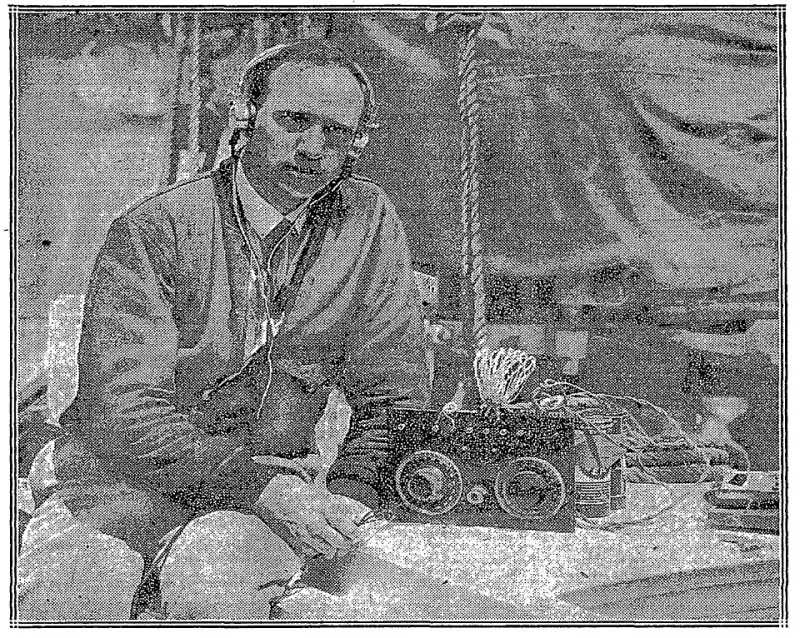
Photo: privacy encryption laptop security code activist workshop, via www.security-everywhere.com
The flyer taped to the community board at a library in Portland doesn't look like a manifesto. It advertises a free workshop. Bring your laptop. Learn to encrypt your email. Light refreshments provided.
But spend an hour inside one of these Cryptoparties — that's actually what they're called — and the ideological current running underneath the practical instruction becomes pretty clear. The people running these events aren't just teaching a skill. They're making an argument: that privacy is infrastructure, and that ordinary Americans have both the right and the technical means to build their own.
This is the DIY encryption movement, and it's been quietly expanding for years in exactly the places you'd expect and several you wouldn't.
Why Now, Why Here
The Snowden disclosures in 2013 function as a kind of origin myth for this community. Before those leaked NSA documents landed in newsrooms around the world, mass surveillance was largely theoretical for most Americans — something that happened in spy movies or authoritarian countries. After Snowden, it was documented, systematic, and domestic.
The policy response was minimal. The legal landscape shifted at the margins. But for a specific cohort of technologists and privacy advocates, the disclosures were a call to action that bypassed the political system entirely. If institutions weren't going to protect digital privacy, they'd build the tools to protect it themselves.
What followed wasn't a single movement with a headquarters and a mailing list. It was more like a distributed flowering — open-source projects, local workshops, Signal protocol adoptions, Tor relay operators, and a slow but steady push to make encryption accessible to people who'd never written a line of code.
The Tools They're Building
The technical landscape of the DIY encryption world is genuinely impressive once you start mapping it out. Signal, the encrypted messaging app, is probably the most visible product of this ecosystem — developed by Open Whisper Systems with nonprofit funding and eventually adopted by journalists, lawyers, and eventually a significant chunk of the general public.
But Signal is the polished surface. Underneath it, there's a sprawling infrastructure of less glamorous projects: PGP key servers, Tor hidden services, encrypted email providers like ProtonMail and Tutanota, and a dozen different tools for securing file storage, communications metadata, and browsing behavior.
The people maintaining these systems often work for free or near-free, funded by donations, grants from organizations like the Electronic Frontier Foundation, or day jobs that have nothing to do with privacy tech. A developer in Austin who maintains a popular open-source encryption library might be pulling in a teacher's salary from a community college adjunct position. The code gets written anyway.
What unites these projects, beyond the technical goal, is a commitment to open-source development. Everything is auditable. Anyone can inspect the code. This isn't just philosophical — it's the only way to build trust in a community that's professionally skeptical of black boxes.
Cryptoparties and the Democratization Problem
Building good encryption tools is one challenge. Getting non-technical people to use them is a completely different one, and it's where the movement gets most interesting from a cultural standpoint.
Cryptoparties started in Australia in 2012 and spread fast. The format is deliberately low-key: a public space, volunteer instructors, and a focus on practical skills over theory. Attendees learn to set up Signal, understand why HTTPS matters, use a VPN, or manage password hygiene. The events attract a genuinely mixed crowd — journalists worried about source protection, domestic violence survivors trying to secure communications from abusive partners, activists of various stripes, and curious civilians who just read something alarming about data brokers.
The instructors tend to be patient with the learning curve, but they're not neutral about why any of this matters. There's an implicit — sometimes explicit — argument being made: that surveillance capitalism and government data collection have created conditions where privacy requires active effort, and that waiting for corporations or legislators to solve the problem is a losing strategy.
This is where the movement's politics get complicated. It spans libertarian techies who distrust all government, left-leaning activists focused on protecting marginalized communities from law enforcement surveillance, and a pragmatic center that just wants their medical searches to stay private. The encryption itself is politically agnostic. The communities built around it are anything but.
The Legal Gray Areas
Cryptography has a genuinely thorny legal history in the United States. The "Crypto Wars" of the 1990s saw the federal government attempt to mandate backdoors in encryption systems — a battle the tech industry and civil liberties organizations ultimately won, though the fight never fully ended.
Today's DIY encryption advocates operate in a landscape where strong encryption is legal but politically contested. Law enforcement agencies regularly argue that end-to-end encryption hampers investigations. Legislative proposals to mandate backdoors resurface periodically. The FBI's ongoing public pressure campaign against "going dark" — their term for the investigative challenges posed by strong encryption — frames the exact tools these communities are building as a public safety problem.
The activists push back hard on this framing, and they have substantive arguments on their side. Backdoors, cryptographers almost universally agree, cannot be built selectively — a vulnerability accessible to law enforcement is a vulnerability accessible to anyone with the skills to find it. The math doesn't care about jurisdiction.
But navigating this argument requires engaging with legal and political systems that many in the movement would rather route around entirely. It's a tension that doesn't resolve cleanly.
The Signal Beneath the Surface
What makes this community worth paying attention to — beyond the technical substance — is what it represents as a cultural phenomenon.
These are people who looked at the architecture of the modern internet, decided it was built against their interests, and started constructing alternatives with whatever tools they had available. The tools happen to be mathematical. The instinct is much older.
There's something deeply American about it, actually — a tradition of building parallel infrastructure when the official version fails you, of treating self-reliance as both a practical strategy and a moral position. The medium is new. The disposition isn't.
The library in Portland will host another Cryptoparty next month. The flyer is already up. Light refreshments provided.