Paper or Nothing: Inside the Cash-Only Corners of the American Economy
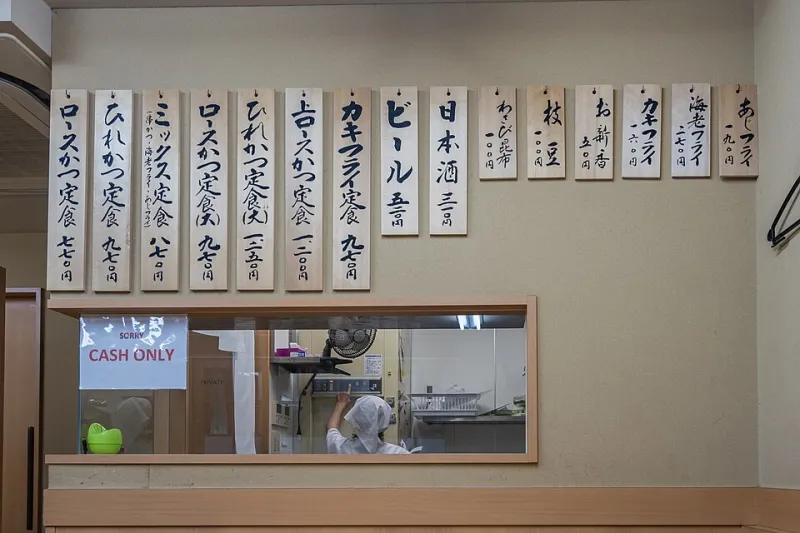
Photo: Wei-Te Wong from Taipei City, Taiwan, Republic of China, CC BY-SA 2.0, via Wikimedia Commons
The Sign Taped to the Register
It's a strip of laminated paper, slightly curling, and it says CASH DISCOUNT 3.5% in marker. You see it now at diners in rural Pennsylvania, taquerias in south Texas, hardware stores in the Pacific Northwest, and a surprising number of tattoo shops in mid-size cities. You also see its blunter cousin: CASH ONLY, NO CARDS, NO EXCEPTIONS, sometimes with an apologetic smiley face drawn underneath.
For a long stretch, a sign like that read as either nostalgia or desperation. In 2026 it reads as a position.
The Math Is Real
Start with the boring explanation, because it's the one most owners will give you. Card acceptance costs money. Interchange fees, processor margins, terminals, chargebacks, and the monthly statement that always seems to contain a line item nobody can explain. On a $9 plate of eggs, 3 percent is 27 cents, and a diner moving 200 plates a day is looking at real money over a year.
Surcharging cards is legal in most states but banned in a handful, and the rules are a patchwork that changes at the statehouse level, which is why so many owners land on the simplest version: post a cash price, post a card price, let the customer choose. It's legal in more places than people assume and it's been spreading since the fee-on-everything mood of the mid-2020s.
Then there's the ATM next to the door, the one charging $2.50, which tells you the owner has done the arithmetic and decided the fee is worth it either way.
Who Actually Does This
Three broad groups show up again and again.
The first is small business owners who never stopped. They opened in the 1990s, they kept the drawer, and when the processors came calling they said no thank you. Their businesses are usually low-margin and high-volume, and their customer base is local enough that nobody is going to walk out over it.
The second is people who have made a deliberate choice after watching their own transaction data become a product. This crowd is younger than the stereotype suggests. They're the same people who read the privacy settings, who use cash at the pharmacy and the liquor store, who don't love the idea of a bank's algorithm knowing they bought antacid at 11 p.m. They aren't hiding from the IRS. They just dislike being the product.
The third group is the friction crowd: the cash-stuffing envelope people, the no-spend challenge crowd, the ones who learned in their twenties that a card is designed to feel like nothing and a twenty is designed to feel like twenty. They pay in paper because paper hurts a little, and hurting a little is the point.
Barter Boards and the Parallel Layer
Walk into a food co-op in a mid-size college town and there's often a corkboard by the exit. Half the index cards are for sale. The other half say things like: will trade two cords of seasoned firewood for dental work. Have a working chest freezer. Want a decent bike. Trade: 8 hours of bookkeeping for 8 hours of carpentry.
Barter is not new, and Craigslist's barter section is older than most of its users. What's changed is the social scaffolding. Buy Nothing groups have spent years normalizing the idea that value can move between neighbors without a payment rail attached. Local timebanks, which trade hours rather than dollars, keep quietly operating in a few dozen American towns. Once you've gotten a couch for free and given away a sander, Venmo starts to look like one option among several rather than the water you swim in.
There's a practical ceiling here. Nobody is paying a mortgage in firewood. But at the margins of daily life, a parallel layer exists and is being rebuilt by hand, one index card at a time.
Untraceable as a Signal
Here's the part that would have sounded strange in 2015. Cash is becoming a way to say something about yourself.
Not loudly. There's no bumper sticker for it. But among a certain slice of Americans, paying with a card at a farmers market feels vaguely like announcing you'd like your habits filed somewhere. The cash-only restaurant has picked up a patina of authenticity, the same way a hand-painted sign or a landline on the wall does. It reads as this place is not optimizing itself for you.
That's a marketing problem for the card networks and an aesthetic opportunity for everybody else. The crypto crowd spent a decade promising untraceable money and mostly delivered a very loud, very public ledger. Cash delivered it in 1789 and never needed a wallet app.
The Cost of Opting Out
It isn't free. Cash-only businesses lose tourists, lose the Tuesday lunch crowd that carries nothing but a phone, and lose the impulse buy that happens when tapping is easier than deciding. Some have started accepting cards again after a slow month. Others put an ATM inside and call it settled.
For individuals, the friction is real too: no purchase protection, no chargeback if the alternator is bad, and the very practical matter of getting cash out of an ATM without paying a fee that eats the savings you were chasing.
Still, the signs keep going up. Not everywhere. Not even close. But enough that you notice them, and enough that the laminated paper in the window has started to look less like a limitation and more like a small, deliberate door out of the system.